
Archive article
Bookmakers’ SRO president attends expert meeting at the Mazhilis
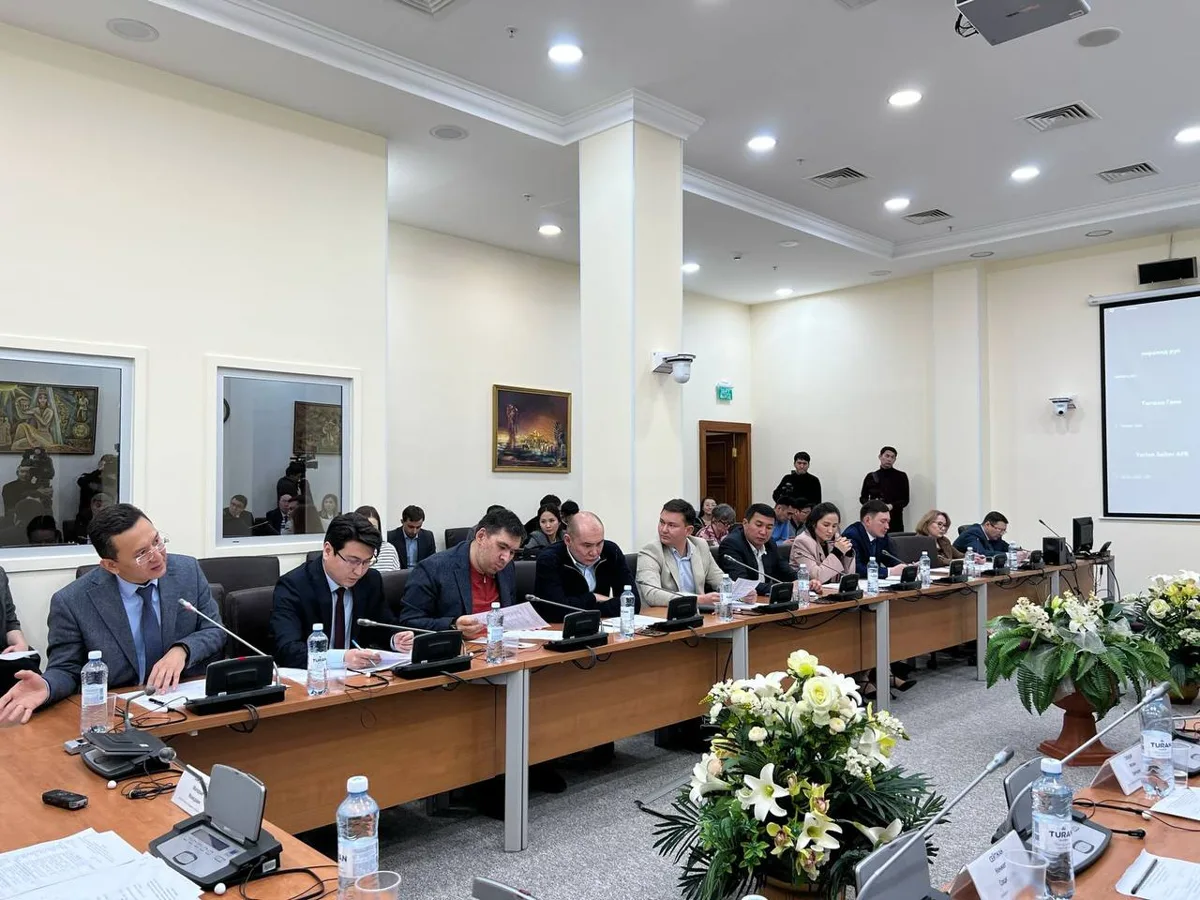
Astana. On 15 April, the Mazhilis held an expert meeting on the bill “On Amendments and Additions to Certain Legislative Acts of the Republic of Kazakhstan on Gambling, Lotteries and Lottery Operations”. The Mazhilis is currently considering the bill. MPs and representatives of government agencies, the Atameken National Chamber of Entrepreneurs and the gambling industry took part in the discussion.
According to Rauan Kenzhalin, President of the Self-Regulatory Organisation of Bookmakers of Kazakhstan (SRO), the main challenge in combating illegal gambling comes from offshore operators whose activities are not regulated under national law. That allows unrestricted financial transactions, aggressive advertising and a lack of age limits or other restrictions.
“The illegal industry is estimated to generate more than KZT 1 trillion a year, which shows the scale of the problem. No country in the world has managed to solve it. But successful regulatory practices show that a comprehensive approach works. Active measures today include blocking illegal websites and financial transactions. Passive measures include legalisation and liberalising legislation,” he said.
The SRO proposed several measures to combat illegal gambling more effectively.
“We propose an allowlist instead of a blocklist. The current amendments in the gambling bill are not very effective when it comes to foreign operators. The blocklist system, in particular, blocks operators only after they have been identified as illegal. It has several drawbacks. First, it is reactive: it acts after a violation. Second, getting a court ruling involves red tape and takes a long time. We propose an allowlist instead, which would enable proactive oversight. Only licensed organisations should be listed. That would make it easier for payment organisations to verify transactions,” Kenzhalin explained.
He added that introducing an allowlist would cost nothing because a register of licensed gambling operators already exists.
“We also propose stronger measures to combat payment manipulation. In tackling the illegal transfer of capital abroad, we identified problems involving payments manipulated to conceal their true purpose. Existing anti-money laundering systems do not fully rule out the use of false merchant category codes, or MCCs. For example, money generated by illegal activities through online casinos can reach bank accounts under different codes or, put simply, under different payment descriptions,” the head of the association explained.
Kenzhalin proposed requiring banks and payment organisations by law to implement effective measures against such payments.
“It is also important to establish administrative and criminal liability for breaches of these requirements to ensure strict compliance. We believe that an allowlist for gambling and betting payments, combined with a legal duty to counter the manipulation of payments for services, would be one of the most effective measures against illegal gambling. It would help tackle illegal gambling and take a more comprehensive approach to money laundering and terrorist financing,” he stressed.
The expert also argued that 21 should be the minimum age for gambling.
“We propose reconsidering the amendments in the gambling bill* that, in our view, would make the problem of gambling addiction worse. The bill would raise the minimum age for gambling from 21 to 25. The aims of the initiative are laudable, but we need to consider the legal implications. Under the Civil Code, citizens have full legal capacity from the age of 18, so making an exception to the general rule for gambling and betting could infringe the constitutional rights of Kazakhstan’s citizens,” he said.
The head of the association noted that the current minimum age is 21 for buying tobacco or alcohol and for participating in lotteries.
“It therefore seems reasonable to apply similar limits to gambling and betting, ensuring a consistent approach to age restrictions. Statistics show that there are more than 1.1 million people aged 20 to 25 in Kazakhstan. Restricting access to licensed gambling could increase activity on illegal online platforms, weakening the state’s protection of young people. We therefore call for the proposal to be reconsidered and for the minimum age to remain at 21,” he said.
Kenzhalin also addressed another provision of the bill: the proposed ban on gambling for people listed in the register of debtors.
“We believe the proposed amendment needs careful assessment. The register covers people with various kinds of debt, including debts to third parties. This broadens the scope of the restriction and could go beyond the original aim of those who proposed it. The Constitution also requires restrictions on rights and freedoms to be proportionate to the aims and interests they serve. In our view, this provision could be seen as disproportionate because it affects the fundamental rights of people listed in the register of debtors,” the head of the association said.
He also raised concerns about how the amendment would be implemented.
“Enforcement officers update the register of debtors in real time. Gambling operators would have to spend considerable time and effort checking the data manually. That increases the risk of erroneous refusals and unlawful inclusion on the list of restricted persons. Given these concerns, we propose rejecting the amendment as impractical and potentially harmful to the industry,” he said.
Kenzhalin drew attention to another provision that would require financial institutions to disclose information about their customers.
“Under the Tax Code, banks are already required to provide state revenue authorities with information on the existence of accounts, balances and movements of funds for gambling operators subject to desk audits. We believe this work must be carried out strictly on a legal basis. We therefore propose considering amendments to the Tax Code that would limit disclosure of information about gambling operators to desk audits by the state revenue authorities,” the head of the association concluded.
During discussion of the bill “On Amendments and Additions to Certain Legislative Acts of the Republic of Kazakhstan on Gambling, Lotteries and Lottery Operations”, its proponents expressed interest in setting up a Bet Accounting Centre.
According to Rauan Kenzhalin, President of the Self-Regulatory Organisation of Bookmakers of Kazakhstan, the proposal raises serious concerns because the Centre would perform functions already handled by government bodies such as the Financial Monitoring Agency, the tax authority and the Ministry of Tourism and Sports. He also stressed that the key parties in responsible gambling are government authorities, gambling operators and players, so bringing in a third party in the form of the Centre was unwarranted.
Kenzhalin also questioned the need for the Centre to withhold commissions from bets to fund sport, given that bookmakers already contribute to social development through taxes and direct support for sports and community initiatives.
Timur Zharkenov, Deputy Chairman of the Management Board of the Atameken National Chamber of Entrepreneurs, also raised concerns, citing Kazakhstan’s poor experience with a single operator under the extended producer responsibility scheme. Zharkenov opposed introducing sole operators in the market, saying the practice undermines healthy competition and could harm the business environment.